
North America is undergoing an energy revolution. Technological advancements – particularly in horizontal drilling and massive hydraulic fracturing – have opened up new and abundant sources of natural gas and crude oil to commercial development, in locations once off limits to the industry. How is this revolution shaking up the traditional landscape of the sector, and how do the resulting uncertainties further underline the need for companies to utilize robust commodity data management processes in order to stay ahead of the pack?
1) New Fracking Technologies
Ever since the widespread adoption of new fracking technologies in 2007, gas production from shale fields has risen from around 3 BCF per day to 28 BCF. This in turn has increased total US production from 55 BCFD in 2007 to an estimated 72 BCFD in early 2014. Similarly, oil production from shale reserves has helped push US crude production from just over 5 million barrels a day in 2008 (a 50 year plus low) to an estimated 8 million barrels per day in 2013 (a 20 year plus high).
2) Increase in US Oil Production
The increase in US oil production has rightly been feted by industry and the political class alike. It has spurred economic growth in parts of the United States, and promises to reduce US reliance on foreign sources of energy (the ‘Holy Grail’). However as one might expect the sharp transition has also thrown up significant disruption. Much of the new production has been found outside the ‘fairways’ of traditional oil and gas infrastructure.
3) Lack of Adequate Pipeline Capacity
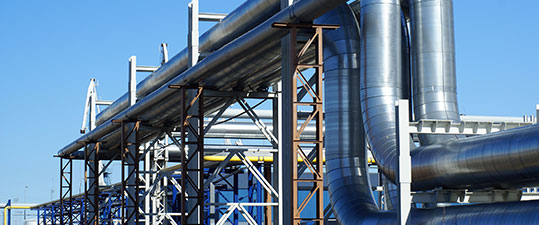
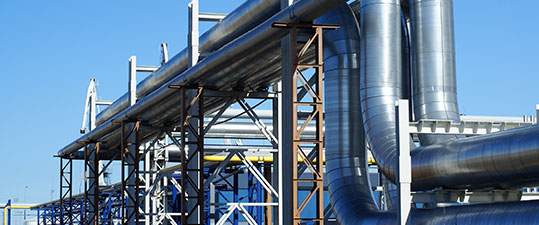
With the increase in new production, the lack of adequate pipeline capacity in proximity to new fields has become an unexpected challenge. Looking in more detail at a few examples: the huge increase in oil production resulting from development of the Bakken Shale field in North Dakota has overrun local pipeline capacity. This has necessitated alternative means of moving that crude to refining centers in the Midwest and along the Gulf Coast. Rail has been the most popular option so far, with an average of 950 tanker cars of oil leaving the state by this route every day at present – around 60 percent of the state’s total oil production.
While pipeline is generally considered preferable to rail due to lower costs and operational risk, increased reliance on rail (thanks in part to delays in the construction of new pipeline capacity) has alerted producers to the unique advantages of rail. More flexible routing allows for delivery to the most lucrative markets with the ability to re-route mid-journey in response to market conditions. While there are a number of proposals on the table for new pipeline capacity in this area to pick up the shortfall, the significant investment in local rail infrastructure combined with environmental concerns makes it uncertain if and when this new capacity will actually materialize.
4) Basis Differentials
As production ramps up, basis differentials between the Gulf Coast and Midwest supply points and the Northeast markets have tightened, reducing the flow of gas from the South. This can be seen with the Marcellus Field in the Appalachian region, where it is making a big and potentially transformational impact on natural gas markets. Southern producers, unable to compete with Marcellus gas in this market, are increasingly having to seek out alternatives, often at lower prices, forcing many to reduce exploration and production budgets for gas projects.
A World of Uncertainty and Volatility
The upshot of all of this is that the industry is in a major state of flux. The map of North American energy is – literally – being re-drawn, and re-drawn again, on a yearly or even monthly basis. While the impact of the shale revolution is undoubtedly a positive one, it has also created a lot of uncertainty and volatility (as any good business revolution should).
Given these rapidly shifting supply patterns, and increasing volumes of oil and gas entering the US markets, wholesale energy traders – particularly natural gas traders – are having difficulty remaining abreast of the changes and adopting to the new dynamics as they emerge.
Once-lucrative transportation capacity is often going unused,
and long-term supply or sales agreements are becoming increasingly uneconomic.
In order to adapt to the impact of new technologies on the energy market, energy traders must adopt next-generation ETRM software. Energy organizations need technology that provides advanced, predictive analytics that assist in making informed decisions by transforming large amounts of data into insights. The software must deliver real-time, meaningful, and actionable information for traders, schedulers, risk managers, and executives to view and analyze. It must also allow simulation of key performance metrics such as risk exposure, P&L, counterparty limits, budget and forecast variances, and storage and transportation costs.
If energy businesses hope to meet the challenges of this Brave New World,
they must have the information and tools that allow them to react appropriately
as supply patterns change, new facilities come online, or
when prices spike due to transportation or supply disruptions during extreme weather.
For traders with easy access to the ‘big picture,’ these market imbalances can offer significant upside. Yet in order to take advantage of opportunities as they arise, traders must utilize systems that consume and aggregate data from multiple markets, and software that can provide the necessary insight generating analysis. The US energy market has been flooded with gas. For energy traders, it’s time to succumb or succeed.
